Healthy Routine for Young Children: A Guide for Parents
Early Foundations Academy
Young children are happiest when they can predict what comes next. A routine is not a timetable stuck to the fridge; it is a rhythm of sleep, meals, play and connection that repeats often enough for a child to feel safe inside it. Here is how we build one at our Moorebank centre, and how you can echo it at home.
Anchor the day with sleep
Sleep drives everything else: appetite, mood, concentration and how well a child copes with frustration. Most one to three year olds still need eleven to fourteen hours across a night and a day sleep, and preschoolers ten to thirteen. Keep wake-up time steady, even on weekends, and let bedtime follow from it rather than the other way round.
Eat at regular times, not on demand
Three meals and two snacks at predictable times keep blood sugar and tempers level. At the centre, breakfast, morning tea, lunch and afternoon tea are cooked fresh on site and served at the same times each day, so children arrive at the table hungry rather than grazing all afternoon. At home, a set snack time is easier to hold than a closed pantry.
Protect long blocks of play
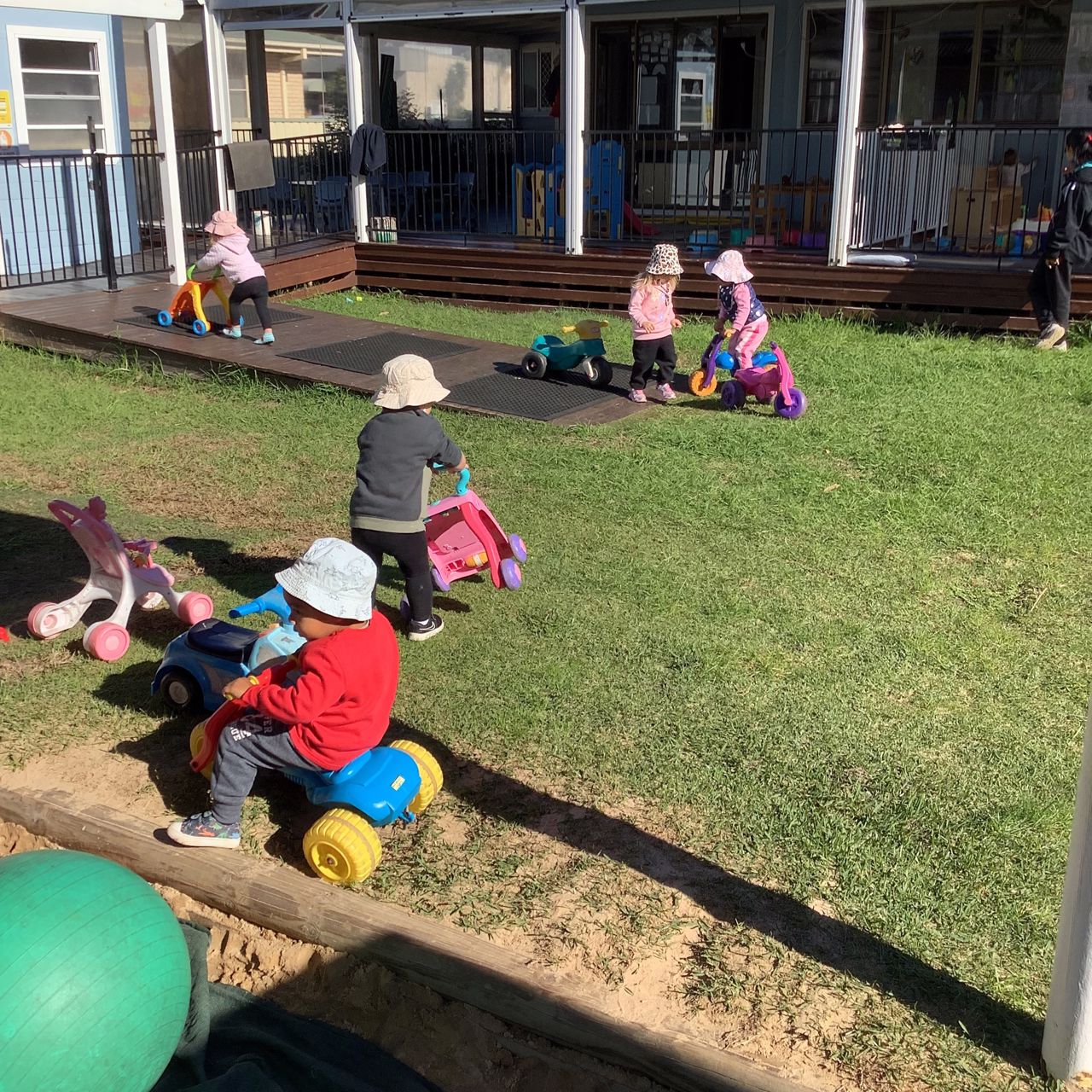
Children need stretches of unhurried play to get properly absorbed in something. Our rooms run indoor and outdoor play in long blocks for exactly this reason. At home, one uninterrupted hour after daycare or on a weekend morning is worth more than several ten minute bursts between errands.
Move every day
Toddlers and preschoolers need around three hours of active movement spread across the day. Walking to the park, climbing, digging in the garden and dancing in the kitchen all count. Outdoor play also helps set the body clock for sleep.
Keep screens small and early
Under twos do best with no screen time, and two to five year olds with under an hour a day of good quality content watched with an adult. Switching screens off at least an hour before bed makes the evening routine noticeably smoother.
Make the transitions the routine
The hard moments are rarely the activities themselves; they are the changes between them. A two minute warning, a song for pack-up, the same order of bath, book and bed. Children cooperate with a sequence they know far more readily than with an instruction they did not expect.
Children do not need a strict timetable. They need the same things to happen in roughly the same order, most days.
The Early Foundations Academy Team
Want to see a rhythm that works for sixty children every day? Book a tour of Early Foundations Academy and watch how our rooms move from arrivals to afternoon tea.